
Rats can become a serious problem around homes and businesses in Rhode Island and Southeastern Massachusetts. They can contaminate stored food, damage building materials and find their way into garages, basements, crawl spaces and other protected areas.
Effective rat and rodent control starts with identifying activity, reducing food and shelter, controlling the existing population and addressing the conditions that allow rodents to remain around the property.
Signs You May Have a Rat Problem

Rats are often active at night and may remain hidden for long periods. In many cases, homeowners notice evidence of rodents before actually seeing one.
Common signs of rat activity include:
- Rodent droppings
- Gnaw marks on wood, plastic or other materials
- Burrows around foundations, sheds or landscaping
- Scratching or movement inside walls and ceilings
- Damaged food or pet-food containers
- Grease or rub marks along frequently traveled areas
- Evidence of nesting material
Finding one of these signs doesn’t necessarily tell you how large the rodent population is, which is why identifying where rodents are traveling and feeding is an important part of developing a control strategy.
Why Rats Around a Property Should Be Addressed
Rats can contaminate food and surfaces with urine and droppings and can damage materials by gnawing. Rodents may also chew insulation, stored belongings and other materials inside structures.
Allowing a rodent problem to continue can make control more difficult as rats establish regular feeding and travel patterns around a property.
Professional Rat Control in Rhode Island and Southeastern Massachusetts

Professional rat control involves more than simply placing bait or traps. The property should be evaluated for rodent activity, food sources, travel routes and potential entry points.
Pro Mosquito Solutions provides professional rodent control for residential and commercial properties throughout Rhode Island and portions of Southeastern Massachusetts.
Inspection and Assessment
A rodent inspection helps determine where activity is occurring and what may be attracting rats to the property. Areas around foundations, garages, sheds, utility penetrations, landscaping and other protected locations may all need to be evaluated.
Rodent Bait Stations
Secure exterior bait stations can be strategically positioned around a property as part of a rodent-management program. Placement should be based on signs of activity and likely rodent travel routes rather than simply spreading stations randomly around the yard.
Trapping
Trapping may be appropriate when rodents have entered garages, basements or other interior areas. The type and placement of traps should correspond with the location and level of rodent activity.
Exclusion
Controlling the existing rodents is only part of the solution. Openings that allow rats or mice to enter a structure should also be identified and corrected whenever practical.
How a Rat Inspection Helps Identify the Problem

Rodents commonly travel along edges, foundations, fences and other protected routes. Looking at the entire property can help identify why rats are visiting and where control measures are most likely to be effective.
An inspection may include checking:
- Foundation openings and utility penetrations
- Garages, basements and crawl spaces
- Areas around sheds and outbuildings
- Trash and recycling storage
- Pet-food storage
- Bird feeders and fallen seed
- Dense vegetation and protected hiding areas
- Evidence of burrowing or established travel routes
DIY Rat Control and Prevention

Homeowners can take several practical steps to make a property less attractive to rats and mice.
Remove Accessible Food
Store pet food, bird seed and other food products in secure containers. Clean spilled seed and avoid leaving pet food outdoors overnight.
Secure Trash
Keep trash containers closed and clean up food waste around outdoor garbage areas. Rats can repeatedly return to a property when a dependable food source is available.
Reduce Hiding Areas
Remove unnecessary clutter and keep vegetation from becoming excessively dense around foundations, garages and sheds. Protected areas can provide rodents with places to travel or hide.
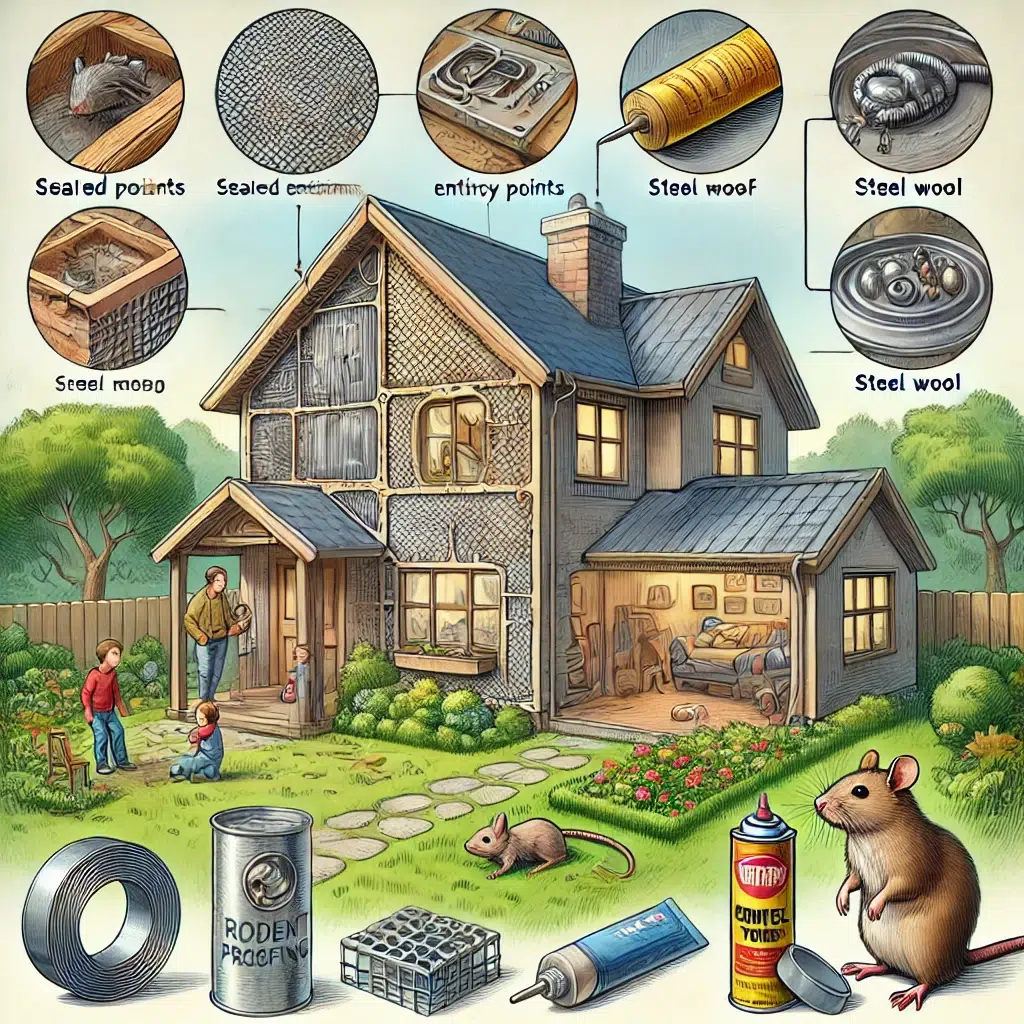
Seal Potential Entry Points
Inspect the exterior of the structure for openings around doors, utility lines, vents and other penetrations. Appropriate rodent-resistant materials should be used when sealing openings.
Use Traps Correctly
When traps are used, placement is important. Rats often travel along walls and established routes rather than crossing open areas randomly.
When to Call a Professional for Rat Control
Professional help may be appropriate when rat activity continues despite basic prevention measures, when rodents have entered the structure, or when you’re unsure where they are coming from.
Persistent activity can indicate that food sources, entry points or established rodent travel routes haven’t been fully addressed.
Residential and Commercial Rodent Control

Rodent problems aren’t limited to houses. Restaurants, offices, warehouses, pet-care facilities and other commercial properties can also provide rodents with food, water and shelter.
Commercial rodent programs may require ongoing monitoring because conditions can change as deliveries, waste storage, landscaping and neighboring properties affect rodent activity.
Residential properties can experience similar pressure, particularly when nearby food sources continually attract rodents into the neighborhood.
Preventing Rats From Returning

Long-term rodent management focuses on reducing the conditions that allow rats to remain around a property.
Important prevention measures include:
- Keeping food and pet food properly stored
- Securing trash and recycling
- Cleaning spilled bird seed
- Reducing clutter around buildings
- Monitoring garages and sheds for activity
- Repairing potential entry points
- Checking bait stations and monitoring devices as needed
- Watching for new droppings, burrows or gnawing
Rodent pressure can also originate beyond an individual property. When rats are active throughout a neighborhood, ongoing monitoring can be important even after activity decreases around one particular home.
Rat Control Throughout Rhode Island
Pro Mosquito Solutions provides rodent control throughout Rhode Island, including Providence, Warwick, Cranston, Johnston, Pawtucket, East Providence, Coventry, East Greenwich, North Providence, Lincoln, Cumberland and Smithfield.
Because property conditions vary considerably between urban neighborhoods, suburban homes and commercial properties, rodent-control strategies should be based on the activity occurring at the individual property.
Learn more about our service area in Cumberland, Rhode Island.
Rat Control in Southeastern Massachusetts
We also provide rodent-control services in portions of Southeastern Massachusetts, including Seekonk, Rehoboth, Attleboro, North Attleborough, Swansea and Somerset.
Homes and businesses near restaurants, commercial areas, dumpsters, waterways and densely developed neighborhoods can experience ongoing rodent pressure even when the property itself is well maintained.
Frequently Asked Questions About Rat Control
Why do rats keep coming onto my property?
Rats usually visit properties because they can find food, water, shelter or protected travel routes. Bird seed, pet food, garbage, dense vegetation and neighboring properties can all contribute to continued activity.
Will exterior bait stations attract rats to my property?
Rodent bait stations are intended to intercept rats that are already traveling through an area. Proper placement focuses on existing rodent travel routes and areas where activity has been identified.
How do I know whether rats are living inside?
Interior droppings, scratching sounds, gnawing, nesting material or repeated sightings may indicate indoor activity. An inspection can help determine whether rodents are entering the structure or primarily traveling outside.
Can rats get into a garage?
Yes. Garages can provide shelter and access to stored food, bird seed, pet food and clutter. Gaps around garage doors and other exterior openings should be checked when rodent activity occurs.
Does getting rid of rats require more than bait?
Often, yes. Effective rodent management may involve baiting or trapping along with sanitation, monitoring and exclusion. Addressing the conditions supporting rodent activity can improve long-term control.
Can rats return after treatment?
Yes. New rodents can move into an area, especially when food and shelter remain available nearby. Continued prevention and monitoring help identify renewed activity early.
Professional Rat and Rodent Control Near You
If you’re seeing rats, mice, droppings, burrows or other signs of rodent activity, Pro Mosquito Solutions can help determine an appropriate control strategy for your property.
Learn more about our rodent-control services or read our guide to rat behavior and control in Rhode Island.
For rodent-control service in Rhode Island or Southeastern Massachusetts, call Pro Mosquito Solutions at (401) 216-8081.

Ryan Lambert is the owner of Pro Mosquito Solutions, a trusted pest control company serving Rhode Island and Southeastern Massachusetts. Known for their eco-friendly, effective pest solutions, Ryan and his team handle mosquitoes, ticks, ants, rodents, and more with customized services that keep properties pest-free. Pro Mosquito Solutions is dedicated to customer satisfaction, using top-quality products and innovative techniques to ensure safe, long-lasting results. Ryan also writes informative blogs, empowering customers with knowledge about pest control and prevention.