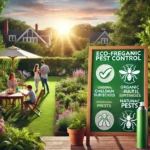

Protecting your home from pests does not always have to begin with a pesticide application. For many Rhode Island homeowners, the first steps can be as simple as removing standing water, sealing entry points, improving sanitation, and choosing targeted treatments when they are needed.
Eco-friendly pest control in Rhode Island focuses on managing pests while considering the effects of treatment decisions on people, pets, beneficial organisms, and the surrounding environment. This can include prevention, monitoring, plant-based products, biological controls, and carefully selected conventional treatments when appropriate.
At Pro Mosquito Solutions, we understand that homeowners have different pest concerns and treatment preferences. As a local, family-owned pest control company serving Rhode Island and Bristol County, Massachusetts, we offer customized services, including natural mosquito and tick treatment options.
Interested in a plant-based approach to outdoor pest control? Explore our natural mosquito and tick treatments, or call or text (401) 216-8081 to discuss your property.
What Is Eco-Friendly Pest Control?
Eco-friendly pest control is a broad term for pest management practices intended to reduce unnecessary environmental impacts while effectively addressing pest problems.
It is not a single product, treatment method, or official safety certification. A treatment described as natural or green may still contain active ingredients that require precautions.
One of the most useful approaches is Integrated Pest Management (IPM), which combines prevention, inspection, pest identification, monitoring, and targeted control methods.
How Integrated Pest Management Works
Rather than relying exclusively on repeated pesticide applications, IPM begins by identifying the pest and understanding why it is present.
For example, a mosquito problem may involve containers holding rainwater, while recurring ant activity may be associated with food sources, moisture, or structural openings.
An IPM-informed approach generally includes:
- Identification: Determine which pest is causing the problem.
- Inspection: Locate breeding areas, nesting sites, food sources, and entry points.
- Prevention: Reduce conditions that attract or support pest populations.
- Monitoring: Watch for changes in pest activity.
- Targeted treatment: Select appropriate control methods when prevention alone is insufficient.
- Evaluation: Review results and adjust the approach when necessary.
These practices can reduce unnecessary treatments and help address the conditions that allow pest problems to continue.
Benefits of an Environmentally Conscious Pest Control Approach
Reducing Unnecessary Pesticide Applications
Not every pest problem requires treating an entire property. Identifying the pest and its source can help determine whether sanitation, exclusion, habitat modification, trapping, or a targeted pesticide application is appropriate.
Using the right method for the problem may reduce unnecessary pesticide use without sacrificing effective pest management.
Considering Children, Pets, and Outdoor Activities
Families often want to know what products are being applied, where they will be used, and when children and pets can return to treated areas.
These are important questions for both natural and conventional pest control products.
Plant-based ingredients are not automatically harmless. Product labels establish application directions, precautions, and any applicable reentry requirements.
For more information about choosing appropriate treatment options, read our guide to pest control considerations for Rhode Island households with pets.
Protecting Beneficial Insects and Sensitive Areas
Pollinators, beneficial insects, aquatic organisms, and other wildlife can be affected by some pest control products, including certain naturally derived substances.
Thoughtful pest management considers where a treatment is needed, whether nonchemical alternatives are practical, and how to avoid unnecessary exposure in sensitive areas.
Applications should follow product restrictions involving flowering plants, water, weather conditions, and other environmental considerations.
Supporting Long-Term Pest Prevention
Removing the conditions that support pests can provide benefits beyond an individual treatment.
For example, eliminating mosquito breeding sites, reducing accessible food for rodents, and sealing structural gaps may help prevent recurring activity.
Learn how prevention fits into year-round pest management for Rhode Island homes.
Natural Mosquito and Tick Control Options in Rhode Island
Mosquitoes and ticks are common outdoor concerns in Rhode Island. Wooded areas, shaded landscaping, standing water, and suitable wildlife habitats can contribute to pest activity around homes and businesses.
Pro Mosquito Solutions offers different mosquito management options, including plant-based treatments for homeowners who prefer a natural product formulation.
Plant-Based Mosquito and Tick Barrier Treatments
Our natural mosquito and tick treatment service provides an alternative to conventional barrier spray formulations.
These treatments use plant-based ingredients and are applied to appropriate outdoor areas according to the selected product’s label.
Depending on property conditions and the treatment program, applications may address suitable mosquito and tick habitats around landscaped areas, vegetation, and outdoor living spaces.
Natural treatments may differ from conventional products in their residual performance, recommended service frequency, and application requirements.
Important: Natural does not mean pesticide-free, non-toxic, or safe under every circumstance. Children and pets must remain away from treated areas until the applicable product’s reentry requirements are satisfied.
If you are comparing treatment types, our article on professional tick barrier treatments versus natural repellents explains important differences.
Conventional Mosquito and Tick Barrier Sprays
Conventional barrier spraying remains another option for managing outdoor mosquito and tick activity.
Our professional mosquito and tick barrier spray service targets appropriate pest habitats using products selected for the service and applied according to label directions.
The most suitable choice depends on your treatment preferences, property conditions, pest pressure, and expectations.
Our team can explain the available programs so you can make an informed decision rather than assuming one type of product is always best.
How In2Care Mosquito Stations Fit Into Pest Management
Another mosquito control option is the In2Care Mosquito Station.
These stations are designed to attract egg-laying female mosquitoes of certain container-breeding species. The system uses a combination of active ingredients and mosquito behavior to help control mosquitoes and their developing offspring.
The stations can contribute to mosquito management by affecting mosquitoes associated with the station and, under suitable conditions, additional breeding sites.
However, they do not eliminate every mosquito species and should not be described as completely chemical-free.
When Are In2Care Stations Useful?
In2Care stations may be appropriate where container-breeding mosquitoes contribute to persistent activity and the property conditions support their use.
They can complement other control measures, including removing standing water and appropriate barrier treatments.
Station placement, maintenance, and effectiveness depend on the product instructions and the mosquito species present.
For additional guidance, read our article about choosing mosquito traps and control devices for your yard.
Eco-Friendly Mosquito Water Management and Larvicide Treatments
Mosquitoes require water to complete their immature life stages. Removing unnecessary standing water is therefore one of the most valuable mosquito prevention practices available to homeowners.
However, some water sources cannot be drained or eliminated.
In appropriate situations, professional mosquito water treatments may help manage developing mosquito larvae.
What Is Bti?
Bacillus thuringiensis israelensis, commonly called Bti, is a naturally occurring bacterium used as an active ingredient in certain mosquito larvicides.
When applied according to the product label, Bti can target susceptible mosquito larvae developing in water.
Bti products are not universally suitable for every water source, and their environmental characteristics depend on the formulation and use conditions.
Homeowners should not assume that every mosquito larvicide is a Bti product or that a treatment is appropriate for wetlands, streams, storm drains, or other regulated water bodies.
Start by Eliminating Standing Water
Before considering a larvicide, inspect your property for unnecessary water accumulation.
- Empty buckets, watering cans, and wheelbarrows.
- Clean gutters and downspouts that retain water.
- Refresh birdbath water regularly.
- Remove or cover unused containers and discarded tires.
- Prevent tarps and outdoor covers from collecting rainwater.
- Maintain ornamental water features appropriately.
Check these areas at least weekly during mosquito season, especially after rainfall.
For more prevention advice, explore our mosquito control tips for Rhode Island homeowners.
Do Essential Oils Really Repel Mosquitoes, Ants, and Ticks?
Essential oils such as citronella, peppermint, and eucalyptus are frequently marketed for natural pest control.
Some formulations can have repellent or insecticidal properties, but effectiveness depends on the ingredient, concentration, formulation, pest species, and application method.
Citronella and Mosquito Repellency
Citronella is used in certain mosquito repellent products. However, candles and decorative citronella plants should not be relied upon as dependable protection against mosquito bites.
For personal bite prevention, choose an EPA-registered repellent and follow its label instructions.
Peppermint Oil for Ants and Other Crawling Insects
Peppermint oil may have repellent effects under some conditions, but household peppermint oil applications are not a dependable solution for an established ant infestation.
Persistent ant problems often require identifying the species, locating food and moisture sources, and selecting appropriate control methods.
Pro Mosquito Solutions offers professional ant control services for homeowners dealing with recurring ant activity.
Eucalyptus and Other Botanical Products
Some botanical ingredients are used in insect repellent formulations. Their effectiveness should be evaluated based on the specific registered product and intended use, not simply the presence of an essential oil.
Essential oils can also present risks to people and pets when used improperly. Concentrated oils should not be applied directly to pets, children, or household surfaces unless the product is specifically intended and labeled for that use.
For more information, see our guide to organic and botanical mosquito control approaches.
Environmentally Conscious Ant and Foundation Pest Prevention
Eco-friendly pest management is not limited to mosquitoes. Homeowners can also take preventive steps to reduce ant and other crawling insect activity around their homes.
Reduce Conditions That Attract Ants
Ants may enter homes while searching for food, moisture, and suitable nesting locations.
Helpful prevention practices include:
- Cleaning up crumbs and food spills promptly.
- Storing pantry items and pet food in appropriate containers.
- Repairing plumbing leaks and reducing excess moisture.
- Sealing accessible cracks and gaps around doors, windows, and utility openings.
- Keeping vegetation and stored materials from creating unnecessary access to the structure.
These measures can reduce attractive conditions, although they may not resolve an established colony.
When Foundation Barrier Treatments May Help
For ongoing crawling insect concerns, Pro Mosquito Solutions offers foundation barrier treatments.
These applications are intended to help manage appropriate crawling insect pests around the exterior of a structure.
A foundation barrier treatment should not automatically be described as natural or organic. The product used, its label, and the treatment program determine its characteristics and required precautions.
For additional information, read our guide to foundation barrier treatments for ants and spiders.
Eco-Friendly Rodent Prevention Without Relying on Repellents
Mice and rats present a different pest management challenge from mosquitoes and ticks.
Natural scents, ultrasonic devices, and homemade repellents are not dependable solutions for an established rodent infestation.
Instead, prevention begins with making the property less accessible and less attractive to rodents.
Seal Entry Points
Inspect accessible areas around foundations, utility penetrations, garage doors, vents, and other structural openings.
Rodents can enter through surprisingly small gaps, so appropriate exclusion materials and sound repairs are important.
Learn more about common rodent entry points in Rhode Island homes.
Reduce Food and Shelter
Store food securely, manage garbage, clean up spilled birdseed, and avoid leaving pet food accessible overnight.
Reduce clutter and unnecessary nesting opportunities around storage areas, garages, and exterior walls.
Use Appropriate Rodent Control When Needed
When rodents are already active, trapping, monitoring, exclusion, and other professional methods may be necessary.
Pro Mosquito Solutions provides rodent control services for mice and rats.
Rodent control is not automatically pesticide-free. If bait products are used, they require appropriate placement, secure equipment where required, and strict adherence to label directions.
Our article on environmentally conscious rodent control in Rhode Island explores additional considerations.
How to Choose the Right Eco-Friendly Pest Control Approach
When evaluating natural or environmentally conscious pest control options, focus on the actual treatment plan rather than marketing labels alone.
Before selecting a service, consider asking:
- What pest species is the treatment intended to manage?
- Can prevention or exclusion reduce the need for treatment?
- What active ingredients are used, if any?
- Is the product appropriate for the intended application area?
- What precautions apply to children, pets, and outdoor activities?
- How frequently might treatment be needed?
- How will treatment effectiveness be evaluated?
- What additional steps can I take between service visits?
A responsible provider should be able to explain the treatment’s purpose, realistic limitations, and relevant precautions.
For broader guidance, see our article on choosing a pest control provider in Rhode Island.
Why Choose Pro Mosquito Solutions?
At Pro Mosquito Solutions, we believe homeowners deserve clear information about their pest control options.
We are a local, family-owned company serving homes and qualifying commercial properties throughout Rhode Island and Bristol County, Massachusetts.
Our approach emphasizes:
- Personalized service: Understanding the pest problem and property conditions before recommending an appropriate program.
- Natural mosquito and tick options: Plant-based treatment choices for customers who prefer these formulations.
- Multiple mosquito management methods: Barrier treatments, In2Care stations, and suitable water treatments.
- Practical prevention advice: Helping homeowners understand breeding sites, pest entry points, and conditions that encourage infestations.
- Professional customer communication: Explaining treatment options, scheduling, expectations, and precautions.
- Local knowledge: Familiarity with the seasonal pest concerns affecting Rhode Island properties.
Our goal is to help you select effective pest management solutions that fit your property and preferences without relying on exaggerated promises.
Want to discuss natural mosquito and tick control? Call or text (401) 216-8081, or contact Pro Mosquito Solutions online.
Eco-Friendly Pest Control Across Rhode Island and Bristol County, Massachusetts
Pro Mosquito Solutions serves customers throughout Rhode Island and Bristol County, Massachusetts.
Our Rhode Island service area includes Providence, Cranston, Warwick, Pawtucket, Cumberland, East Providence, Johnston, Coventry, and surrounding communities.
In Bristol County, Massachusetts, we serve communities including Attleboro, North Attleborough, Seekonk, Rehoboth, Somerset, and Swansea.
For information about services in your area, visit our Providence pest control page or our Attleboro pest control page.
Contact our team to confirm service availability and discuss the options appropriate for your location.
Frequently Asked Questions About Eco-Friendly Pest Control
What is eco-friendly pest control?
Eco-friendly pest control refers to pest management practices intended to reduce unnecessary environmental impacts. These may include prevention, exclusion, monitoring, biological controls, plant-based products, and targeted treatments. The best approach depends on the pest and property conditions.
Is natural pest control safe for children and pets?
Natural does not automatically mean harmless or risk-free. Plant-based products can still require precautions. Children and pets should remain away from treated areas until the selected product’s label requirements have been met. Always follow the specific treatment instructions.
How effective are natural mosquito and tick treatments?
Plant-based mosquito and tick treatments can help reduce pest activity when used appropriately, but effectiveness varies by product, pest pressure, weather, and property conditions. Some natural formulations may require different application schedules from conventional treatments.
How often do eco-friendly pest control treatments need to be applied?
Frequency depends on the pest, product, and treatment method. Natural mosquito and tick treatments, mosquito stations, and other control options have different maintenance requirements. Pro Mosquito Solutions can explain the recommended schedule for your selected service.
Will eco-friendly pest control work for mosquitoes, ants, and rodents?
Different pests require different approaches. Mosquitoes may be managed through breeding-site reduction and appropriate treatments, while ants and rodents often require sanitation, exclusion, monitoring, or targeted control. No single natural product reliably solves every pest problem.
What is the difference between natural and conventional mosquito spraying?
Natural mosquito treatments generally use plant-based active ingredients, while conventional treatments use different formulations. Their performance, residual activity, precautions, and application schedules may differ. Both types must be applied according to their product labels.
Are In2Care Mosquito Stations chemical-free?
No. In2Care Mosquito Stations use active ingredients as part of their mosquito control system. They are designed to help manage certain container-breeding mosquito species and may complement other mosquito prevention and treatment methods.
Can I reduce mosquitoes without spraying my entire yard?
Yes. Removing standing water, maintaining gutters, using window screens, and reducing mosquito breeding habitats are valuable steps. Depending on the property, targeted water treatments or mosquito stations may also be appropriate. These measures may not eliminate all mosquito activity.
Are essential oils a reliable replacement for professional pest control?
Not always. Some essential oil formulations have repellent properties, but household oils and homemade sprays are not dependable solutions for every pest or infestation. Effectiveness depends on the product, formulation, and intended use.
Does Pro Mosquito Solutions offer natural pest control in Rhode Island?
Yes. Pro Mosquito Solutions offers plant-based mosquito and tick treatment options for customers in Rhode Island and Bristol County, Massachusetts. We also provide conventional mosquito and tick treatments and other pest management services appropriate for different pest problems.
How much does natural mosquito and tick control cost?
Pricing depends on the property, treatment option, and recommended service schedule. Contact Pro Mosquito Solutions at (401) 216-8081 to discuss your needs and receive information about available services and pricing.
How do I schedule natural mosquito and tick treatments?
Call or text (401) 216-8081 or visit the Pro Mosquito Solutions contact page. Tell us about your property, the pest activity you are experiencing, and your treatment preferences. Our team can discuss the available options.
Explore Eco-Friendly Pest Control Options for Your Home
Environmentally conscious pest control begins with understanding the problem and choosing methods that make sense for your property.
From removing mosquito breeding sites to improving rodent exclusion and selecting appropriate plant-based mosquito treatments, homeowners have several ways to reduce pest activity while considering environmental impacts.
Pro Mosquito Solutions is proud to help customers throughout Rhode Island and Bristol County, Massachusetts explore practical, customized pest management options.
Ready to enjoy your property with fewer pest problems? Call or text (401) 216-8081 or contact Pro Mosquito Solutions to learn more about our natural mosquito and tick treatments and other professional pest control services.

Ryan Lambert is the owner of Pro Mosquito Solutions, a trusted pest control company serving Rhode Island and Bristol County, Massachusetts. Known for their eco-friendly, effective pest solutions, Ryan and his team handle mosquitoes, ticks, ants, rodents, and more with customized services that keep properties pest-free. Pro Mosquito Solutions is dedicated to customer satisfaction, using top-quality products and innovative techniques to ensure safe, long-lasting results. Ryan also writes informative blogs, empowering customers with knowledge about pest control and prevention.